 Open 24 hours · 7 days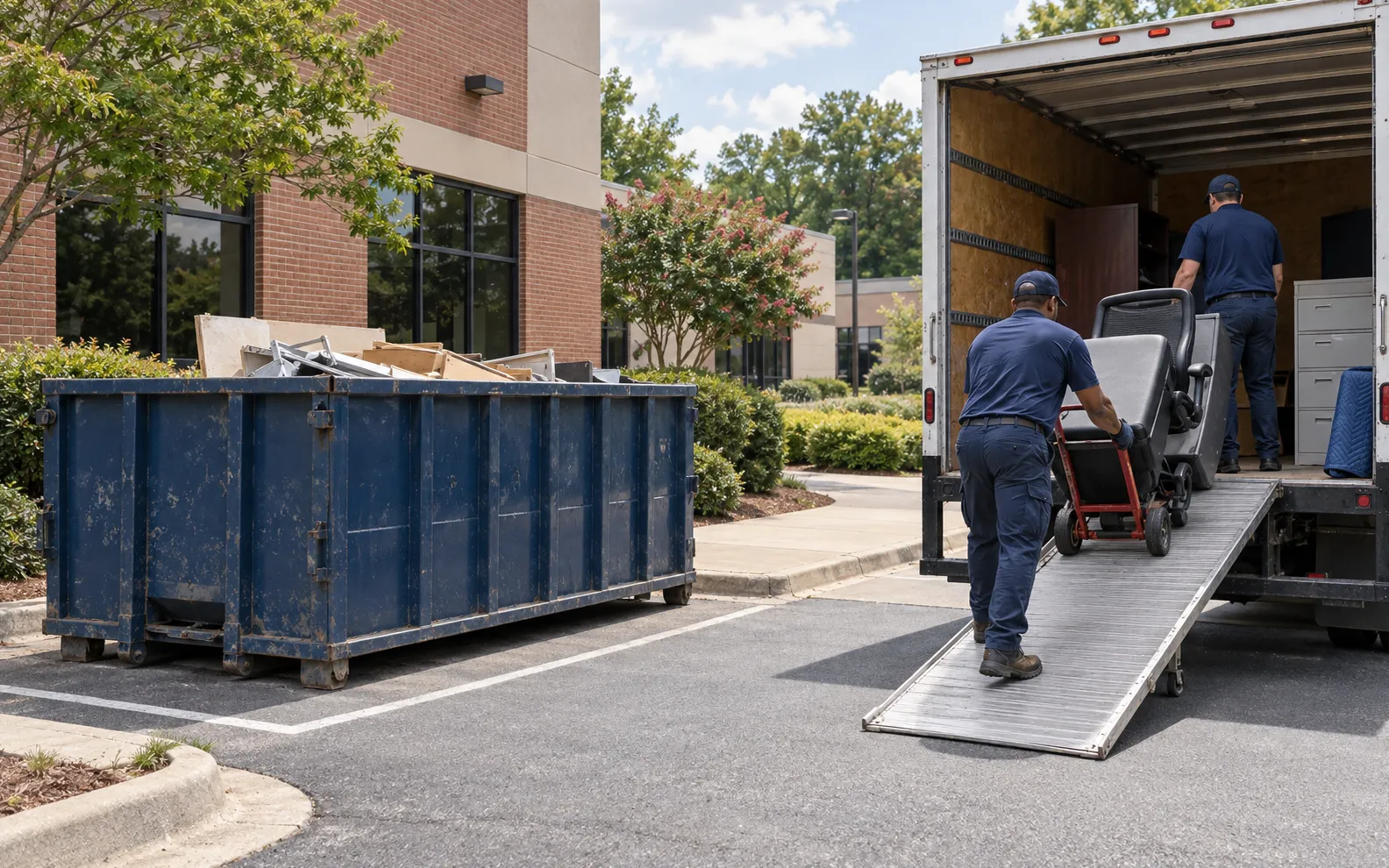
The deciding question is usually who will load the material and where the container or truck can legally stand. Price matters, but a cheap container is not useful if the property forbids placement or the team cannot safely carry the load.
Side-by-side decision table
| Question | Dumpster may fit | Full service may fit |
|---|---|---|
| Who loads? | Your staff or contractors can safely load | You need a crew to carry and load |
| How long? | You want several days for gradual loading | You want a scheduled removal window |
| Site space | Approved, accessible placement is available | A truck can stage briefly without leaving a container |
| Building access | Material is already near the container | Items must come from rooms, floors, or storage areas |
| Load control | You can prevent prohibited items and overfilling | You want the crew to review the visible load |
| Business disruption | An onsite container will not affect customers or parking | You need the loading area back quickly |
When a dumpster earns its space
A container can work well during a renovation or staged clearout when material appears over several days. It lets the project team load at its own pace. Before ordering, confirm placement permission, delivery clearance, surface protection, pickup access, allowed materials, weight terms, fill line, rental period, and local requirements.
Assign someone to control the container. Open dumpsters can attract unrelated dumping, rainwater, or items the provider does not accept. Keep the material below the stated fill line and do not let sharp or unstable pieces extend beyond the container.
When full service solves the harder problem
Full-service removal is useful when labor and indoor access are the real constraints. The crew can carry approved items from offices, storage rooms, upper floors, or a commercial unit and load them during the appointment. This approach can also fit properties that do not allow a container to remain onsite.
It still needs preparation. The provider needs to know the item mix, access route, parking, stairs or elevators, building hours, and any disassembly. Separate confidential records, data devices, hazardous material, and utilities work before the appointment.
Try the five-question test
- Can a container legally and safely sit onsite for the required period?
- Do we have trained, available people to load everything?
- Will material appear gradually or is it ready now?
- Can we control what enters the load?
- Does the building require a short loading window, reserved dock, or elevator?
If the first two answers are yes and the job unfolds over time, compare container terms. If labor, indoor carry-out, or a short building window is the problem, compare full-service scope. Larger projects may use both: a crew for interior removal and a container for ongoing contractor debris.
Do not use either option for unknown hazardous material
A dumpster and a junk truck are not default routes for chemicals, asbestos, lead-contaminated debris, fuel, pressurized cylinders, medical waste, or unknown material. Identify the waste and arrange the proper facility or specialist before loading.
See commercial hauling in Chester, or use the debris sorting guide if the job comes from renovation work.
Sources
U.S. EPA, Sustainable Management of Construction and Demolition Materials, and Chesterfield County Convenience Centers, accessed September 21, 2026. Confirm provider terms, property permission, and current local rules before choosing.