 Open 24 hours · 7 days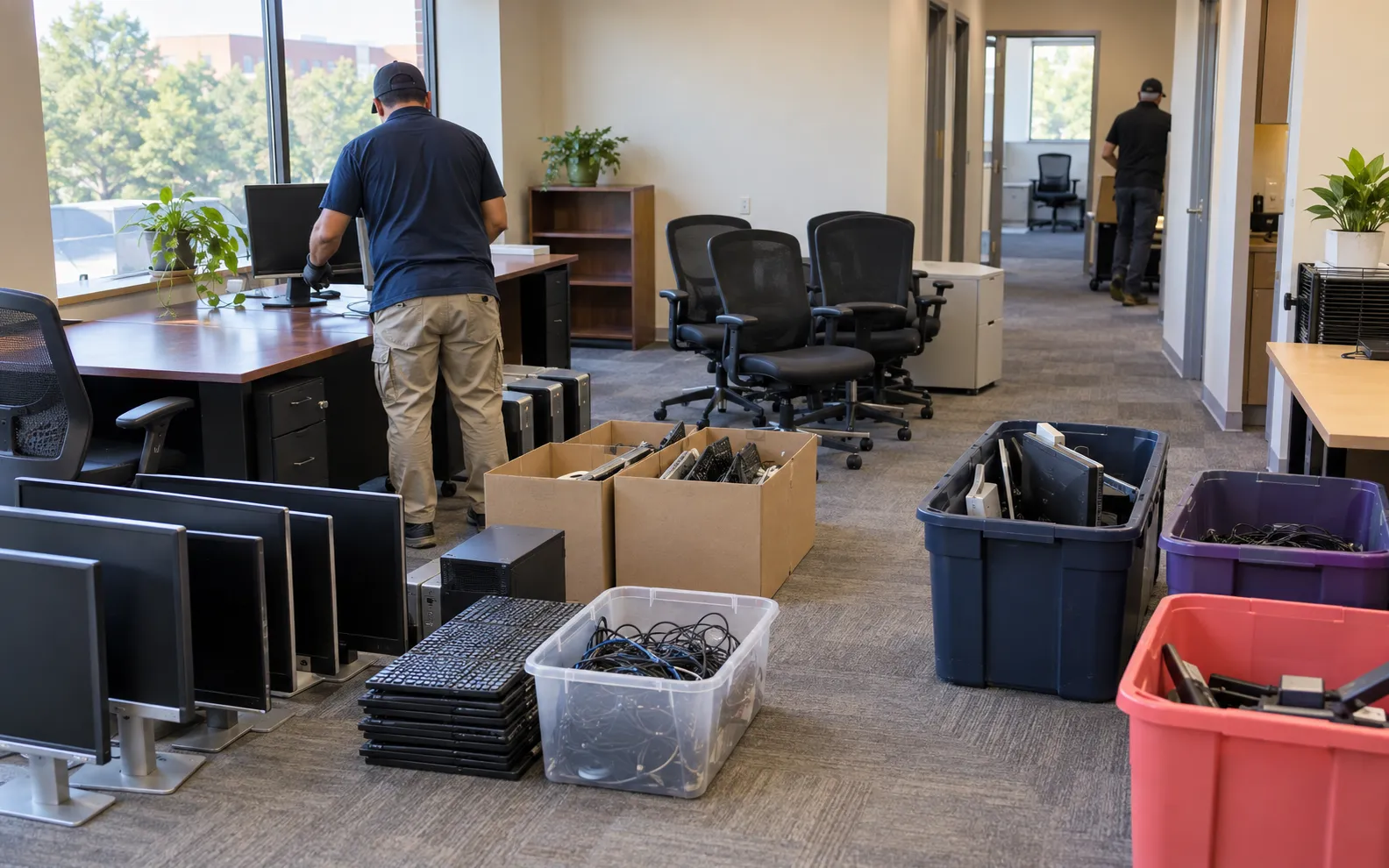
An office cleanout works best when one person owns the item decisions and another owns building access. Without those roles, crews lose time waiting for a desk to be approved, an elevator to open, or an IT device to be cleared.
One week or more before removal
- Name a decision-maker. Give one person authority to resolve questions about keep and remove items during the job.
- Walk every included room. Count offices, conference rooms, storage rooms, kitchens, reception areas, and offsite storage.
- Mark what stays. Use a clear, consistent system. A paper label can fall off, so pair labels with a room list or photos.
- Separate records and data equipment. Documents, drives, computers, phones, access cards, and network gear should follow the company’s approved retention, wiping, recycling, or destruction process.
- Ask the property manager. Confirm loading dock rules, elevator reservations, insurance requirements, parking, floor protection, and permitted work hours.
Build a useful item inventory
| Category | Record | Decision to make |
|---|---|---|
| Furniture | Type, count, condition, disassembly | Reuse, transfer, donate, sell, or remove |
| Electronics | Device type, data status, batteries | Internal recovery, certified recycling, or approved removal |
| Records | Box count, retention status | Store, shred, or move under chain of custody |
| Appliances | Type, utilities, refrigerant | Disconnect, transfer, or arrange proper disposal |
| General contents | Approximate bags or boxes | Keep separate from restricted material |
Photos are useful, but take them from more than one angle. A wide shot shows room volume; a close shot shows dense contents, awkward shapes, or material that may need a different disposal route.
Protect business continuity
Plan the cleanout around what the business needs the next morning. Keep fire exits, accessible paths, electrical panels, and active work areas clear. If staff will remain onsite, use a defined loading route rather than moving material through normal foot traffic.
Do not ask a general hauling crew to make decisions about confidential records or data-bearing devices. Those items should already be assigned to the responsible internal team or an approved specialist. Chesterfield County currently lists periodic e-cycling options for residents, but a business should confirm whether a program accepts commercial material before relying on it.
The day-before check
- Confirm the appointment window and onsite contact.
- Reserve the elevator or dock and share entry instructions.
- Remove personal property, cash, keys, medication, and confidential records.
- Empty refrigerators and cabinets.
- Have qualified trades disconnect appliances or fixed equipment where required.
- Move vehicles away from the loading point.
- Send updated photos if the load changed.
Final walkthrough
Walk the included rooms with the approved scope in hand. Check closets, cabinets, loading areas, and any staging location. Confirm that keep items remain, removal items are gone, and the access route has not been left blocked. If the lease or project requires sweeping, patching, utility work, or deep cleaning, treat that as a separate line item unless it was expressly included.
For labor and hauling together, review the office cleanout service. If the job is still taking shape, call (804) 735-2620 with photos, floor access, and your target date.
Sources
Local disposal context: Chesterfield County Convenience Centers, accessed September 21, 2026. County programs, eligibility, fees, and accepted items can change; verify current rules directly. Workplace lifting and material handling should follow the employer’s safety program and applicable requirements.